
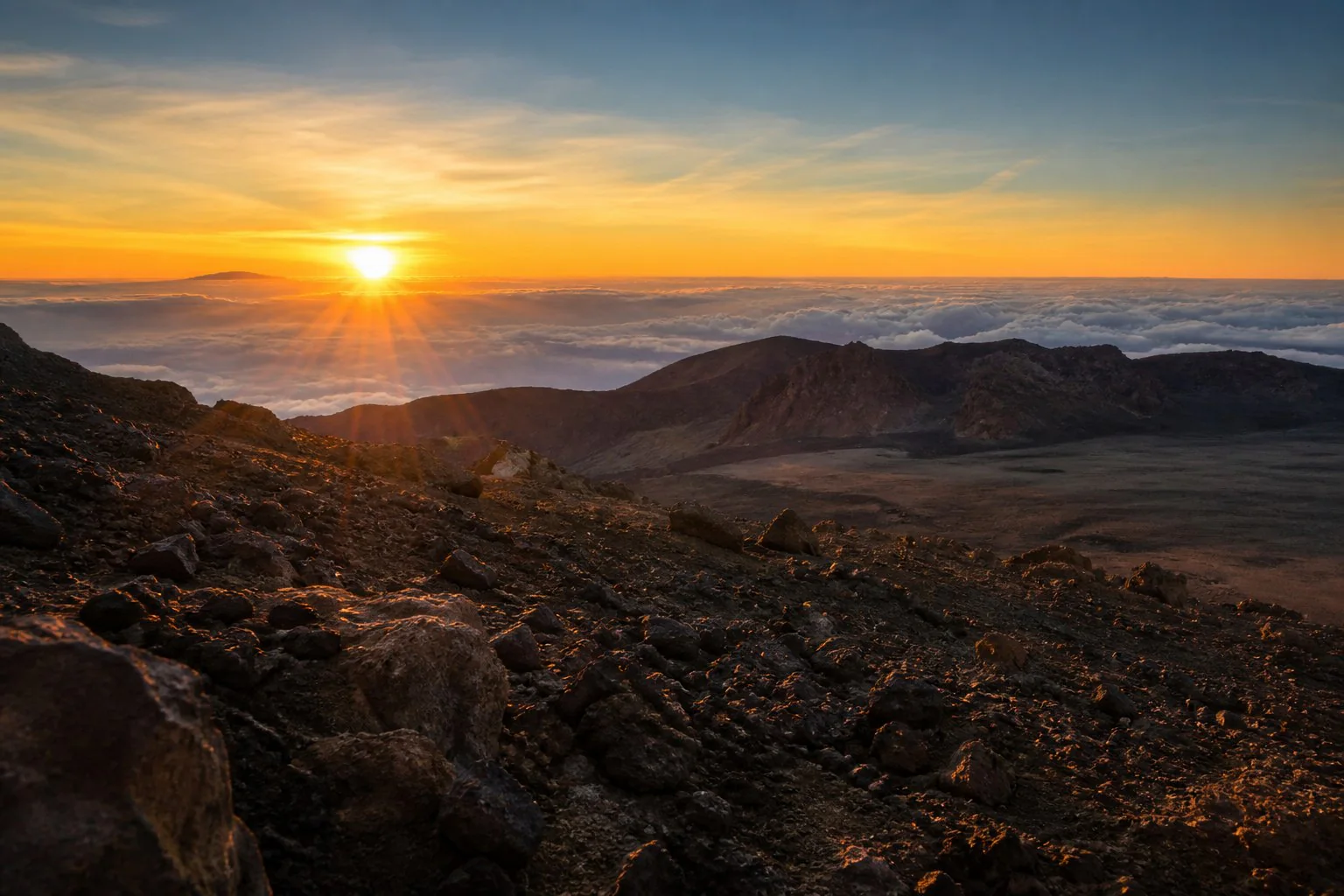
The best time to visit Tenerife
There is no single best time: it depends on what you are coming to do. For beaches and warm sea, June to October. For hiking, October to May, when the heat eases. For the night sky, any month away from a full Moon, with longer nights in winter. And for the island as a whole, spring and autumn tend to give the best balance.
People ask me a lot about "the best month", and the honest answer is that on this island the right question is a different one: which altitude and which slope will you be on? Several climates coexist here, and that weighs more than the calendar.
This piece separates the four things visitors usually come for and explains which month suits each.
Why Tenerife has several climates at once
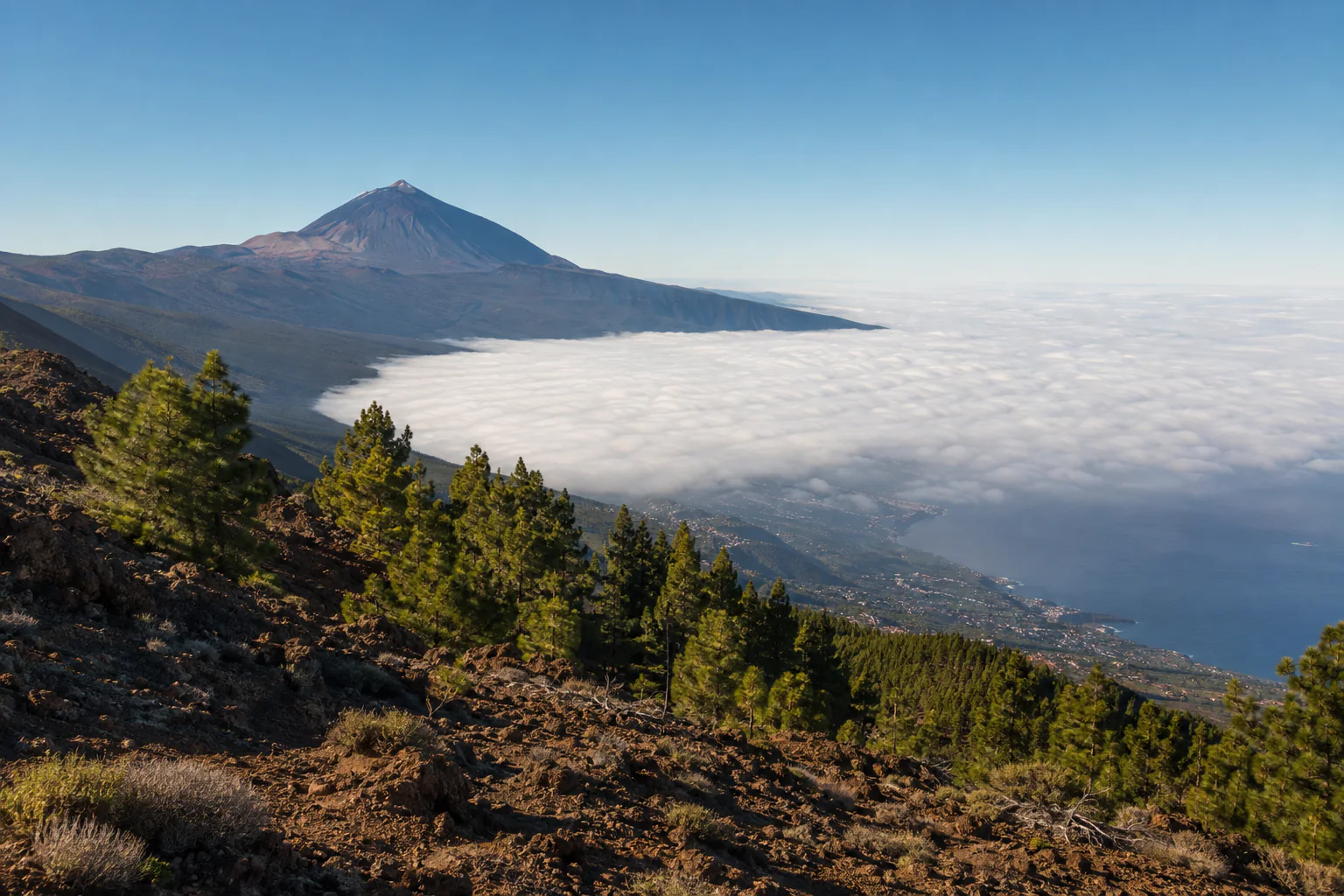
The trade winds arrive from the north-east carrying moisture. When it meets the mountains it condenses into a layer of cloud covering the northern slope at mid-altitude. Above that layer the sky clears; below it, and in the south, it is clear too.
Three consequences follow, and they shape any trip:
- The north is green and damp; the south is dry and sunny. This is not a nuance. It is a different island.
- Altitude changes the temperature more than the month does. The summit area is cold in August.
- An overcast day at sea level is not a lost day. Usually it just means changing slope or gaining height.
So when someone writes to me worried because their forecast shows cloud, my answer is almost always: it depends where we are going.
By what you want to do
Coast and swimming
June to October. The sea is warmer and the south offers the most reliable sunshine. July and August are the busiest and most expensive; September and October usually give a better balance between water temperature and calm.
You can swim perfectly well in the south in winter, but the water is noticeably cooler and wind is more frequent.
Mountains and hiking
October to May. Walking at mid-altitude in summer heat, with a declared wildfire risk, is neither pleasant nor sensible. Spring is particularly good: comfortable temperatures and flowering at altitude.
Two seasonal warnings that matter:
- In summer, always check the wildfire risk level before a walk. The Cabildo publishes alerts and pre-alerts, and there are restrictions attached to them.
- In winter it can snow at the summit, with temporary closures of access roads and of regulated trails.
Astronomy
Any month works; the Moon is what rules. A full Moon washes out faint stars and the Milky Way; a new Moon or a quarter leaves far more sky available.
What is visible changes by season: winter for the most recognisable constellations and long nights; summer for the dense Milky Way, but with short nights; spring for galaxies; autumn for stability. I go into it in where and when to go stargazing in Tenerife.
The trade-off: winter is the coldest time to stand still outdoors at altitude at night, and that is felt far more than people expect.
Heritage, cities and food
All year. La Laguna does not depend on the season, though in winter it is worth being ready for rain.
Food does have a calendar. The grape harvest runs from late summer into autumn, and traditional guachinches tend to open in the months following it. I explain that in what is a guachinche.
Season by season
| Season | In favour | Against |
|---|---|---|
| Winter | Mild on the coast, long nights for the sky, possible snow at the summit, quieter than summer | Rain in the north, genuine cold at altitude, occasional closures for snow |
| Spring | Comfortable temperatures, flowering at altitude, good for walking, fewer visitors than summer | The sea is still cool |
| Summer | Warm sea, reliable sun in the south, mild nights | Heat at mid-altitude, wildfire risk, peak crowds and prices, short nights |
| Autumn | Warm sea, stable conditions, fewer visitors, harvest season | Very little against it; the season I most often recommend |
Calima: the factor nobody plans for
This is an episode of suspended dust that can occur at any time of year. It reduces visibility, raises the temperature and can be uncomfortable for anyone with respiratory problems.
Two things worth knowing: it lasts a few days and it cannot be forecast far ahead. It is no reason to choose one month over another, but it is a reason to keep some flexibility inside your trip and not to tie all your landscape days to the same date.
Reading the forecast without getting caught out
- Check the forecast for where you are going, not for your hotel. The most common mistake.
- At the summit, wind matters more than temperature. It affects the cable car, the wind chill and telescope observing.
- Low cloud in the north tells you nothing about the summit. Often it means the opposite.
- Use AEMET for the forecast and, in summer, the Cabildo’s wildfire alerts.
How I can help
When someone writes with a broad range of dates, part of my job is telling them which day suits what they want to do. With the night sky it is especially useful, because the lunar phase changes the evening enormously and almost nobody checks it when booking.
I am an official tourist guide of the Canary Islands (GTI-289), Starlight Guide no. 40 and a qualified low and mid-mountain trail guide (AFDA0611). I check conditions before every outing and, if they do not cooperate, I say so beforehand.
→ See the private tours, and write to me with your possible dates: I will tell you which fits best.
Frequently asked questions
What is the worst month to visit Tenerife? There is no bad one. If I had to name the most awkward for certain activities it would be August: heat at mid-altitude, wildfire restrictions, peak crowds and short nights for the sky.
Does it rain much in Tenerife? Little in the south and considerably more in the north, especially in winter. Even so, the rain tends to come in episodes rather than as full days of it.
Can you see snow on Teide? On some winter days, yes. When it happens there may be access restrictions for safety, and the regulated high-mountain trails can close.
When are there fewest tourists? Outside school holidays and the main long weekends. May, June and the second half of September are usually calmer.
Does the season affect what you see through a telescope? Yes, because the sky turns through the year. But the lunar phase weighs more than the month, and the conditions on that particular night weigh more still.
What about Carnival? It brings a great deal of life to Santa Cruz and other towns, and also more expensive, busier accommodation. If you are coming for it, book far ahead; if not, factor it in when choosing dates.
Does the temperature change much between day and night? On the coast, little. At altitude, enormously. It is the contrast that most surprises visitors and the one people most often fail to pack for.
Before you fix your dates
Check the forecast with AEMET and, if the sky interests you, the lunar phase for your days. If you have flexibility, tell me when you write.
→ Check availability · Tenerife in 3 days · Planning your trip
Qualifications, registrations and professional associations
Official Canary Islands Tourist Guide, Starlight Guide and low and medium mountain route guide.
- Official guideGTI-289
- Starlight Guideno. 40
- Low and medium mountainAFDA0611
- Active tourismTA-4-0026356.16
- Tourism intermediaryI-0005095.1
Registered active tourism activity with the current civil liability and assistance or accident insurance required by law.