Hiking in Teide without going to the summit
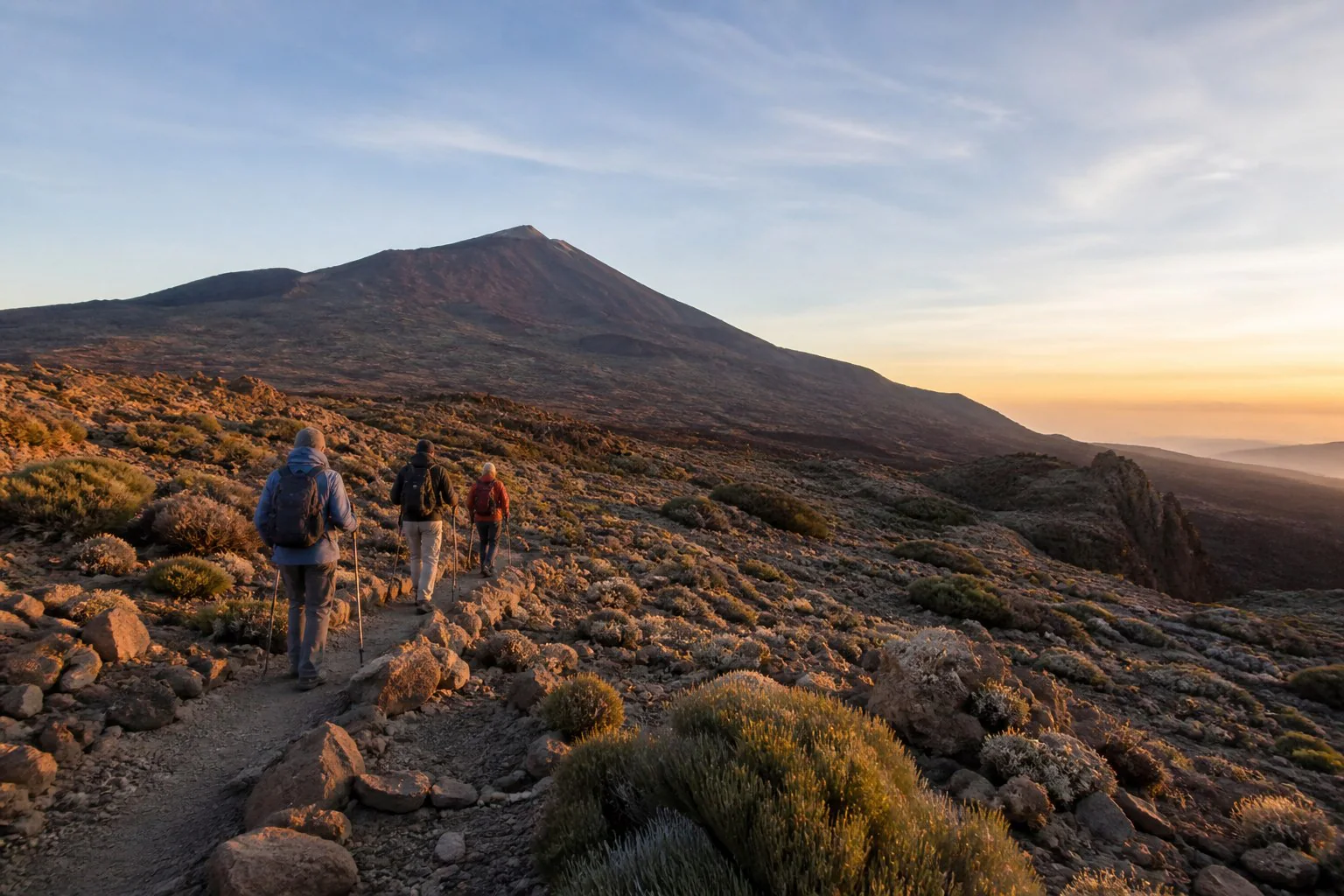
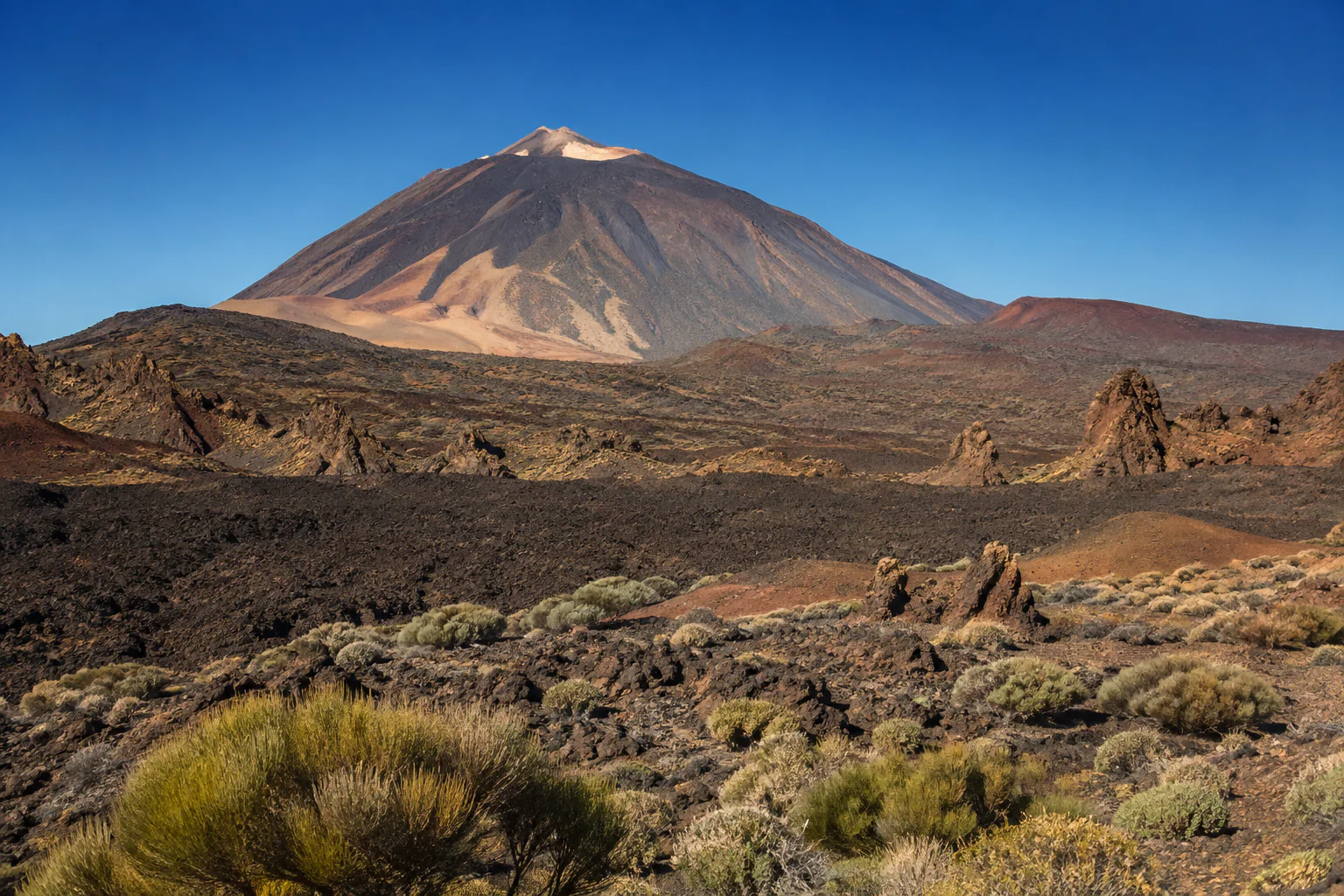
Teide National Park has a network of trails that has nothing to do with the summit cone or the cable car. Many of them are freely accessible and cross the inner plain, the lava flows, the secondary cones and the caldera rim. Only four high-mountain trails and access to the summit require a prior permit, booked through the Tenerife ON platform.
There is a widespread idea that going to Teide means going up Teide. Which is a pity, because the summit cone is the part of the park from which the landscape is least visible, and the part that demands most paperwork.
What follows is what I suggest to anyone who actually wants to walk there.
Why walk the park without going to the top
Three practical reasons and one underlying one.
Because no paperwork is needed. Most of the park’s waymarked trails are freely accessible: no booking, no cap, no fee.
Because you see more. From inside the caldera you take in the scale of the whole: the escarpment wall, lava flows of different ages, the secondary cones and Teide itself as a constant reference. From the top, Teide disappears from view, because you are standing on it.
Because the effort is proportionate. The summit cone demands extreme altitude; the inner plain, around 2,000 to 2,200 metres, is demanding but within reach of far more people.
And the underlying reason: the park’s landscape is understood by walking, not by looking. The texture of a lava flow, the crunch of lapilli, the real size of a volcanic block or the way a plant survives up there are not things you appreciate through a car window.
What is freely accessible
Without publishing specific itineraries, because the network changes and so do conditions, the park offers several kinds of walking:
Trails across the inner plain. The most manageable: little ascent, volcanic terrain and continuous perspectives on the escarpment and the Teide–Pico Viejo complex.
Routes between lava flows and secondary cones. Where the chronology of the landscape reads most clearly: black, rough flows are recent in geological terms; those covered in vegetation or smoothed by erosion are older.
Caldera rim trails. With the full perspective on the interior and, on favourable days, the sea of clouds below.
Short walks from viewpoints. For anyone who does not want a long hike but does want to get out of the car and onto the ground.
The official up-to-date list, with trail conditions and incidents, is on Tenerife ON. Check it before you go: there are seasonal closures and closures for works.
What requires a permit
So there are no surprises:
| Route | Permit |
|---|---|
| Waymarked, freely accessible park trails | No |
| PNT 07 Montaña Blanca – La Rambleta | Yes, with a fee in certain time bands |
| PNT 09 Teide – Pico Viejo – Mirador de las Narices del Teide | Yes |
| PNT 23 Los Regatones Negros | Yes |
| PNT 28 | Yes |
| PNT 10 Telesforo Bravo, the summit cone | Yes, with a fee and an identity check |
Permits are booked on the Cabildo de Tenerife’s Tenerife ON platform, from each trail’s page. Slots open on Mondays at 07:00 Canary time, and you must be registered and validated beforehand.
The full detail of the process and the fees is in climbing Teide: which permit you need and which you don’t.
One important note: the four regulated high-mountain trails are not gentle alternatives. They are difficult itineraries with equipment requirements. They are not the plan B for anyone who missed out on a summit permit.
What to know before walking there
Altitude. The inner plain sits around 2,000 to 2,200 metres. Most people cope well, but breathing is a little harder and it pays to walk unhurried and drink more than usual. Anyone with heart or respiratory conditions should check beforehand.
Cold and wind. The summit climate is dry, with sharp day-night contrasts and frequent wind. It can snow in winter. Up there, wind matters more than temperature.
Radiation. Stronger at altitude, and deceptive because the air feels cool. High-factor sun protection, sunglasses and something for your head, always.
The terrain. Uneven and loose. Volcanic rock is sharp, and leaving the trail is not only an environmental offence: it is a risk.
Water. The air is very dry. Dehydration creeps up unnoticed and there are no water points spread around the park.
What to bring
- Closed shoes with grip. Street trainers will not do.
- Layers and a windproof, even if it is twenty-five degrees below. This is the park’s number one mistake.
- High-factor sun protection, sunglasses and a cap.
- Enough water and something to eat.
- Hat and gloves in winter.
How I can help
In the National Park, an agreed and well-chosen walk repays far more than the race to the top, and it leaves time to explain what you are seeing: why the caldera has that shape, what the colour of a flow tells you, and how a plant survives at that altitude.
I guide a private day that combines an interpreted route through the park, a walk agreed with your group, sunset over the volcanic landscape and telescope observing once night falls. The walking itinerary is decided according to your real pace, the date and the conditions, and confirmed in writing before booking.
I am an official tourist guide of the Canary Islands (GTI-289), Starlight Guide no. 40 and a qualified low and mid-mountain trail guide (AFDA0611), with the activity registered for active tourism (TA-4-0026356.16) and the insurance the regulations require.
I do not offer the ascent to the summit cone, which requires a personal permit applied for by each visitor.
→ Teide Completo, six hours with a walk, sunset and stargazing.
If you want a route focused purely on walking, there is another format: private guided hiking.
Frequently asked questions
Is Teide worth it if I do not go to the top? Far more than people imagine. The summit is the one place in the park from which you cannot see Teide, and the landscape that makes the place singular is in the caldera, not on the cone.
Which trails can I walk without a permit? Most of the waymarked ones. The current list, with incidents and closures, is on Tenerife ON: worth checking the day before.
Are the regulated trails easier than the summit? Not necessarily. PNT 07, 09, 23 and 28 are high-mountain itineraries, rated as difficult and with equipment requirements. They are not a gentle version of anything.
Can you walk in the park with children? Yes, choosing short routes across the inner plain and with the usual precautions around sun, cold and water. What tends to tire them is the drive up, not the walking.
What if the weather is poor? At altitude the deciding factor is wind, not rain. In strong gusts, besides being unpleasant, the cable car can close and some access points may be restricted. In winter there can be snow and associated closures.
Is there shade? Practically none. Worth factoring into the time of day you choose, especially in summer.
Can I combine a walk with sunset and stars? Yes, and it is the combination that works best: you walk in daylight, wait for sunset and observe the sky once it gets dark, all on the same outing.
Before you go
Check trail conditions, closures and incidents at tenerifeon.es, and the National Park information on the Government of the Canary Islands portal. And check the wind forecast, which is what shapes the day most.
→ Check availability · How to visit Teide · Teide peak permit
Qualifications, registrations and professional associations
Official Canary Islands Tourist Guide, Starlight Guide and low and medium mountain route guide.
- Official guideGTI-289
- Starlight Guideno. 40
- Low and medium mountainAFDA0611
- Active tourismTA-4-0026356.16
- Tourism intermediaryI-0005095.1
Registered active tourism activity with the current civil liability and assistance or accident insurance required by law.