
Tenerife guide
Tenerife food and wine
Eating well in Tenerife is not hard, but it does require understanding two things: what a guachinche is, and why the wine here does not resemble what you probably drink at home. With those settled, the rest chooses itself.
What a guachinche actually is
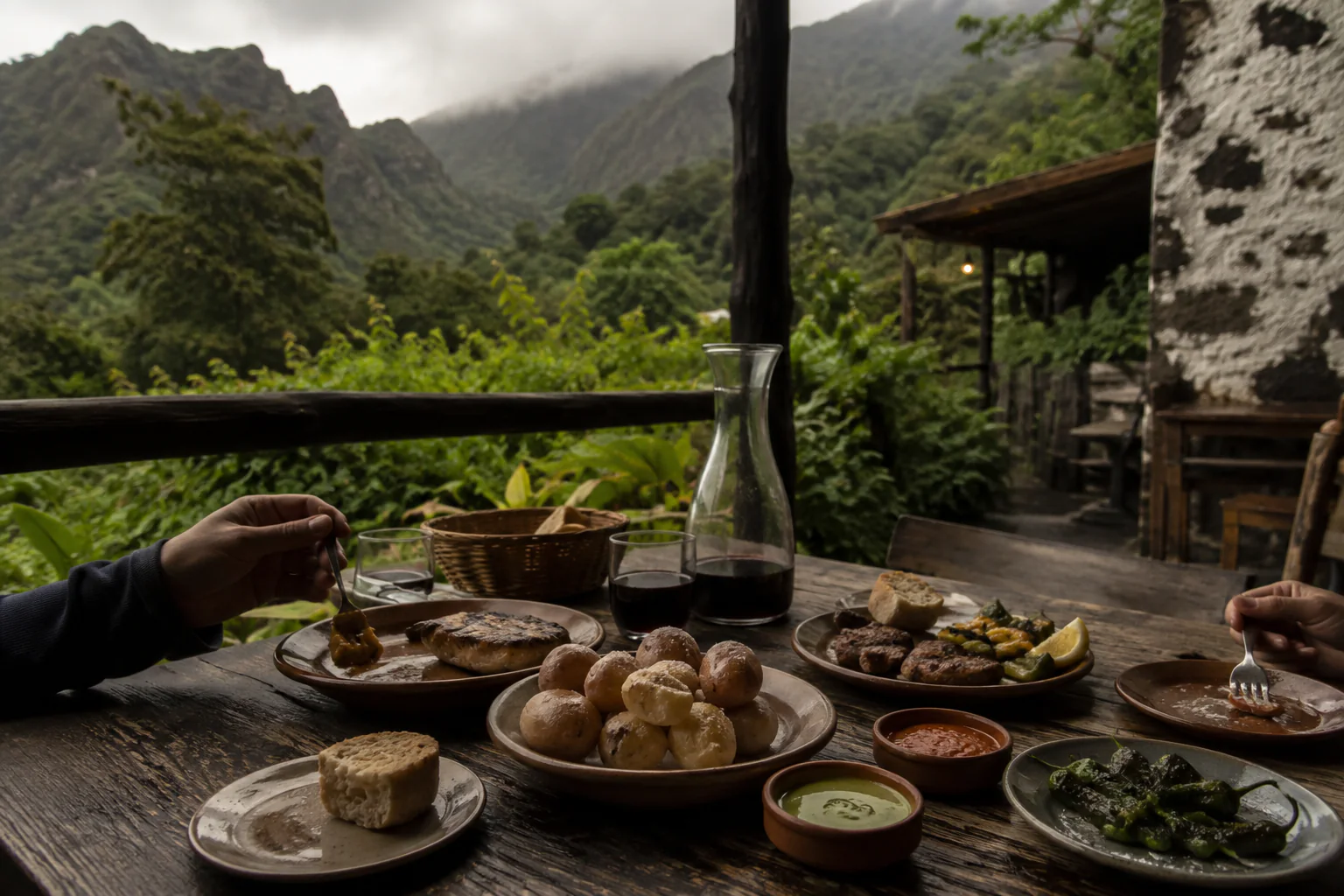
A guachinche is an establishment particular to northern Tenerife where wine from the owner’s own harvest is served alongside a short menu of home cooking. It is not a decorating style or a restaurant category: it is a regulated form of business, with conditions covering the wine served, the number of dishes and the activity itself.
The origin lies in the wine trade. Northern growers opened their houses to sell the new wine, and served simple food alongside it. Many of the authentic ones still work that way: they open while the harvest’s wine lasts and close when it runs out. Which is why one may well be shut on the date that suited you.
Popularity also brought commercial use of the name. Some places called guachinche are restaurants. It is not a culinary fraud, but it is worth knowing what you are walking into.
How to spot a traditional one: a very short menu, often recited or chalked on a board; house wine; limited hours; a location in vine country, almost always in the north and often at the end of a narrow road; and seasonality.
Practical advice: check it is open before you go. That is the single most useful line in this piece.
What to order
Without turning it into an exhaustive list, these are the dishes that explain the cooking here:
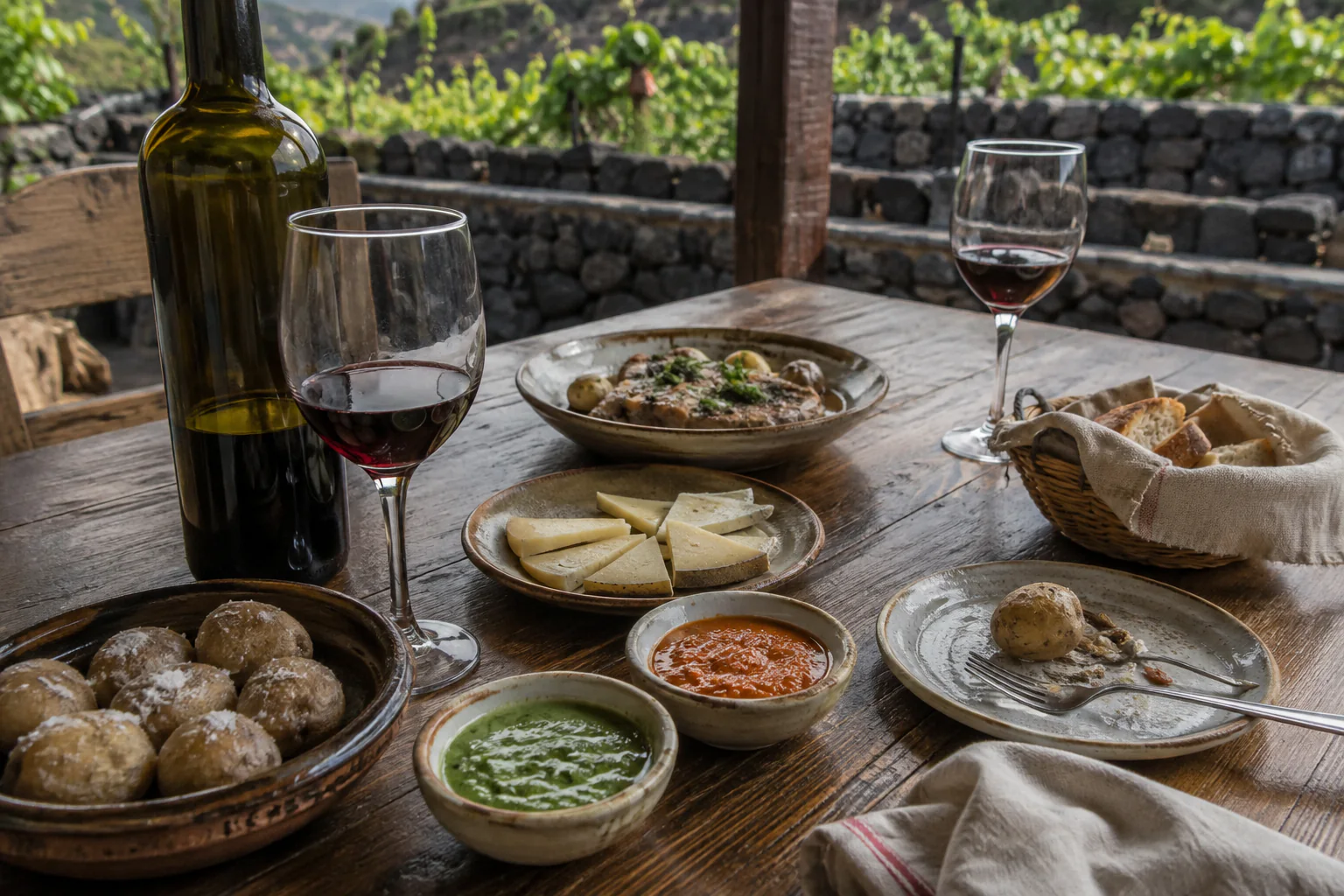
- Papas arrugadas with mojo. Local potatoes boiled in heavily salted water, served with red mojo — pepper-based — or green — coriander or parsley-based. It is the signature dish and the best introduction.
- Gofio. Toasted grain flour, a pre-Hispanic inheritance. It appears as escaldón, kneaded, or alongside stews. It is the ingredient that most puzzles visitors and the one that best tells the island’s food history.
- Carne fiesta, ribs with corn, and rabbit in salmorejo. The guachinche classics. Rabbit in salmorejo, marinated with garlic, pepper and wine, is probably the most representative dish of all.
- Almogrote, a paste of cured cheese with pepper and oil, originally from La Gomera but very present here.
- Canarian cheeses, mostly goat’s milk: fresh, semi-cured or smoked.
- Fish of the day, grilled, on the coast, with potatoes and mojo.
- Canarian bananas, a different variety from the common banana, with a different taste.
- Traditional desserts such as frangollo or bienmesabe: sweet and substantial.
The wine: five denominations on one island
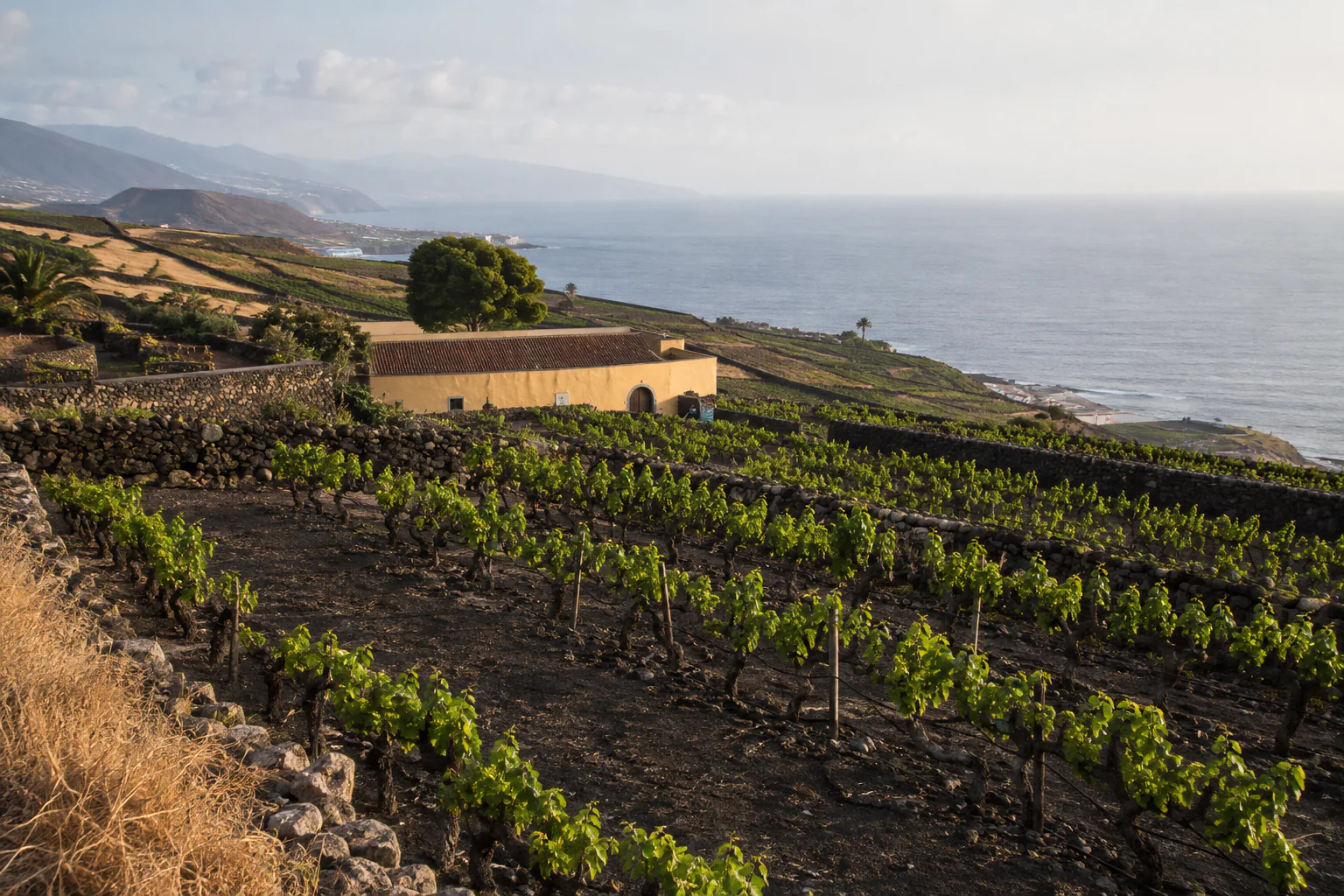
Here comes the part almost nobody expects. Tenerife has more vineyard area than any other Canary Island and holds five denominations of origin, each tied to a different slope and altitude.
Which means there is no such thing as "Tenerife wine". There are wines from the humid northern slope and wines from the dry southern heights, and they taste like different places.
What they share is the ground: volcanic soil, vines on steep terrain, plenty of old vines and varieties that survived the phylloxera plague that devastated Europe in the nineteenth century. So you will meet grape names you have not seen before: listán negro, listán blanco, negramoll, malvasía volcánica, marmajuelo, vijariego.
A little history explains the local pride: Canary wines, especially malvasía, were exported to the courts of Europe for centuries and appear in English literature of the period. Wine was this island’s main connection to the world long before tourism.
Where to start: a listán white with sharp acidity tends to surprise anyone expecting a warm wine; a young listán negro red is the natural partner for rabbit and grilled meat; and a sweet malvasía at the end closes the historical circle.
Where and how to eat
At a guachinche, for the most local version, in the north, having checked it is open.
At a winery, if the process and the landscape interest you. Many island wineries run visits and tastings by prior booking; book ahead, because capacity is limited.
In a coastal fishing town, if what you want is fish. The rule is simple: ask what came in today rather than ordering from the menu.
At the municipal markets, to see the produce: cheeses, old potato varieties, mojos, bananas, subtropical fruit.
Common mistakes
- Going to a guachinche without checking it is open. As above. It is number one.
- Searching for the perfect guachinche online. The best ones rarely have a website, and the top results are usually restaurants.
- Expecting a long menu. If the menu is long, it is probably not a traditional guachinche.
- Expecting mainland hours. People eat late here, and many northern places close early in the evening.
- Assuming mojo picón is mild. It varies enormously from house to house.
- Dismissing the local wine without trying it. It is the most frequent surprise among visitors from the continent.
- Driving to a tasting without thinking it through first.
Frequently asked questions
Is eating out in Tenerife expensive? Traditional northern cooking usually offers very good value for what you get. Restaurants in the southern resort areas play in a different price bracket.
Are there vegetarian options? Increasingly, though traditional guachinche cooking is very meat-heavy. Potatoes, stews, gofio, cheeses and local vegetables give you plenty to work with, but it is worth asking ahead at small places.
Can you visit a winery without booking? Not advisable. Most work by appointment with limited capacity.
What exactly is mojo? A cold emulsified sauce in two families: red, with pepper and sometimes paprika, and green, with coriander or parsley. It accompanies potatoes, meat and fish.
Is the Canarian banana the same as a regular banana? No. It is a different variety: smaller, sweeter, with speckled skin when ripe.
When is the best time for wine? The harvest runs from late summer into autumn, and that is the busiest season at the wineries. Traditional guachinches tend to open in the months following the harvest.
If you would rather do it with someone
I guide two private days that place the food within a route with context: one ends at a guachinche after La Laguna and Anaga, the other pairs La Laguna with an arranged visit to a northern winery.
Read next: what to see in La Laguna and planning your trip.
Plan with clear information
Practical guides for planning your visit
Detailed answers to the questions worth settling before you plan the day.
Qualifications, registrations and professional associations
Official Canary Islands Tourist Guide, Starlight Guide and low and medium mountain route guide.
- Official guideGTI-289
- Starlight Guideno. 40
- Low and medium mountainAFDA0611
- Active tourismTA-4-0026356.16
- Tourism intermediaryI-0005095.1
Registered active tourism activity with the current civil liability and assistance or accident insurance required by law.