
Tenerife guide
What to see in La Laguna, and why its street plan matters
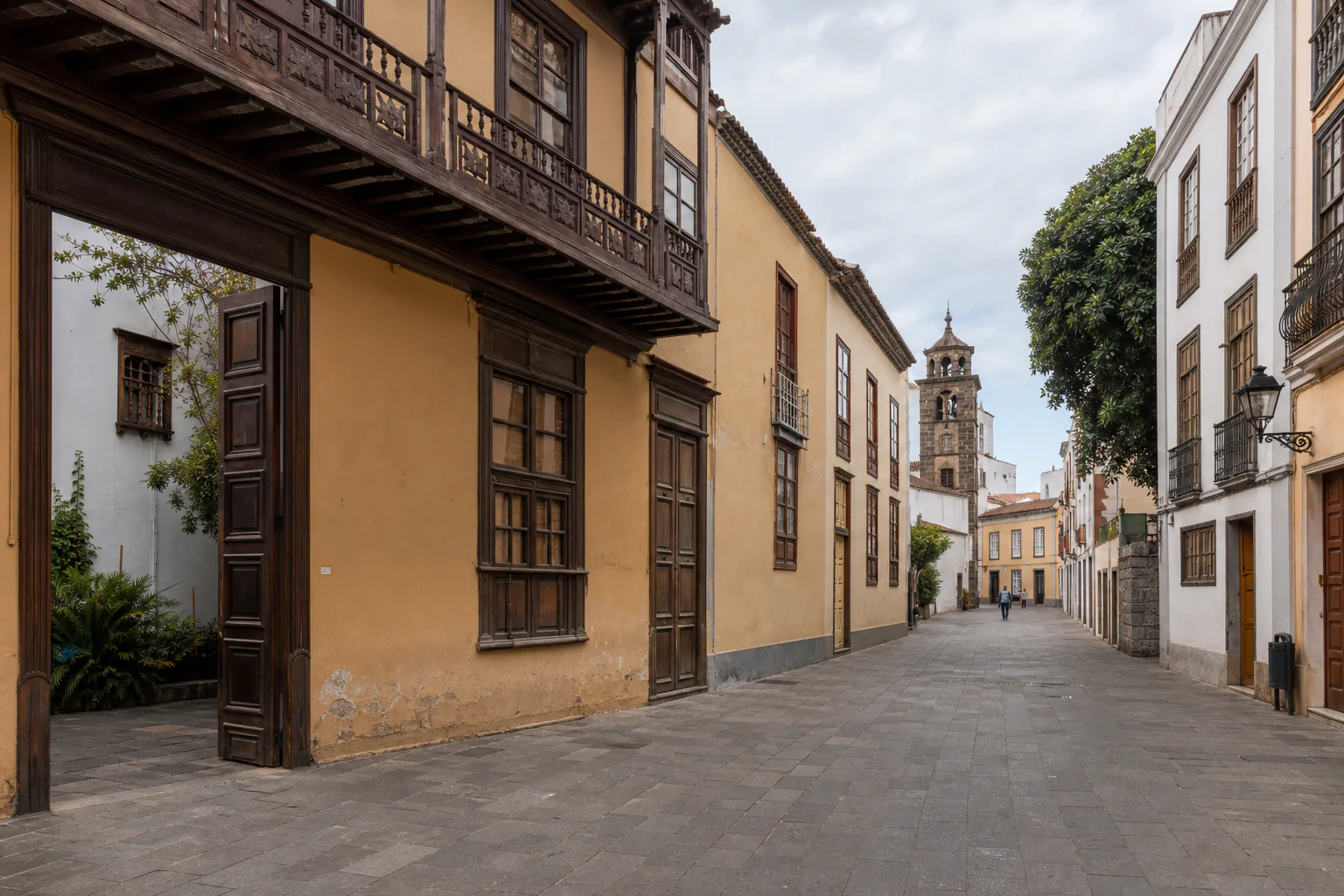
San Cristóbal de La Laguna is the visit that changes most depending on what you know when you arrive. Without context it is a pleasant old town with coloured houses and good terraces. With context it is an urban document: the first Spanish colonial town plan built without walls, laid out at the end of the fifteenth century and later copied across the Atlantic.
That is precisely why UNESCO inscribed it on the World Heritage List in 1999, under the criteria that recognise its role as an urban model.
The idea that makes this city unusual
Almost every European city of its era grew around a fortification, organically and defensively. La Laguna was founded differently: as an open, planned town-territory, unwalled, with straight streets organising space and distributing land.
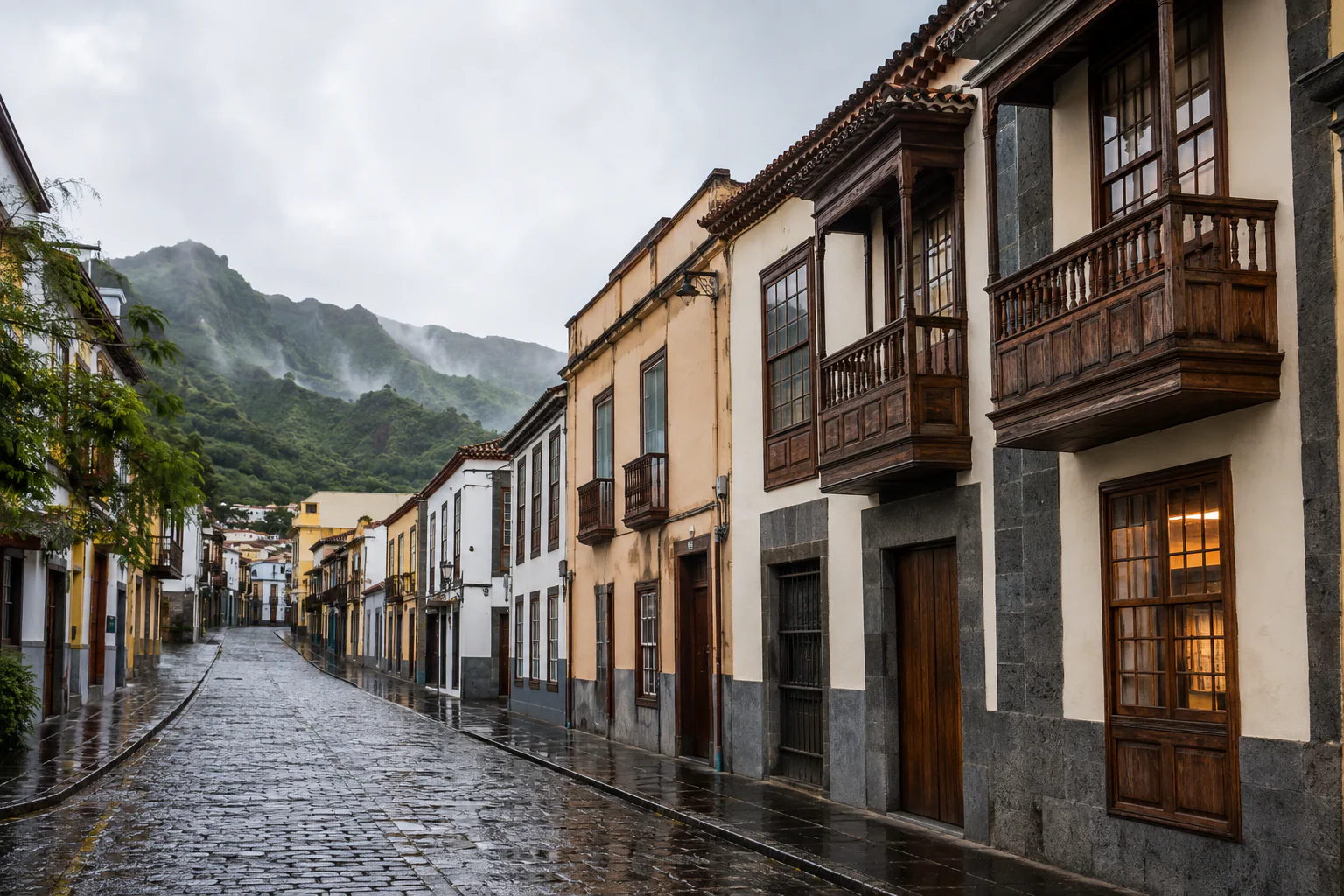
That model — the city drawn before it is built — travelled to the Americas and was repeated in many colonial foundations. When you walk these streets you are not looking at a picturesque old quarter; you are looking at the first trial of an idea that went on to organise dozens of cities across a continent.
Once you know that, the plan reads itself. The long straight streets stop being a coincidence.
How to walk it
On foot and unhurried. The centre is largely flat and entirely walkable. You need no transport inside it.
Looking inwards. This is the tip people thank me for most. Traditional Canarian architecture organises the house around an inner courtyard with wooden galleries. From the street you only see the façade. Many entrance halls are open and let you glance in: that is where half the interesting city lives.
Looking up. Balconies, joinery, coffered ceilings, cornices. Timber is the material that tells this island’s building history.
With time to sit. La Laguna is a living university city, not a set. Part of what you take away is the atmosphere, not only the monuments.
What deserves a stop
Without turning it into a checklist:
- The main squares, which organise the whole and gather the institutional buildings.
- The historic churches, which mark the town’s growth and preserve very characteristic ceilings and towers.
- The courtyard houses, the basic unit of this urban model.
- The long streets of the original layout, better understood walked end to end than sampled at random.
- The university atmosphere, especially on weekdays in term time.
I would rather not give a closed list of names: two well-chosen hours give you more than a twenty-stop route done at pace.
When to go
On weekdays the city is working: shops open, students, life. That is when it makes most sense.
In the morning the light is better for the architecture and there are fewer visitors.
On Sundays much is closed, though the walk is still worthwhile.
On the weather: La Laguna sits on the northern slope at around 500 metres, and is usually cooler and cloudier than the south. Leaving the coast in sunshine and arriving here under grey skies is entirely normal. Bring a light jacket, even in summer.
How long you need
Two hours covers the main ensemble at a calm pace, with a look into a few courtyards.
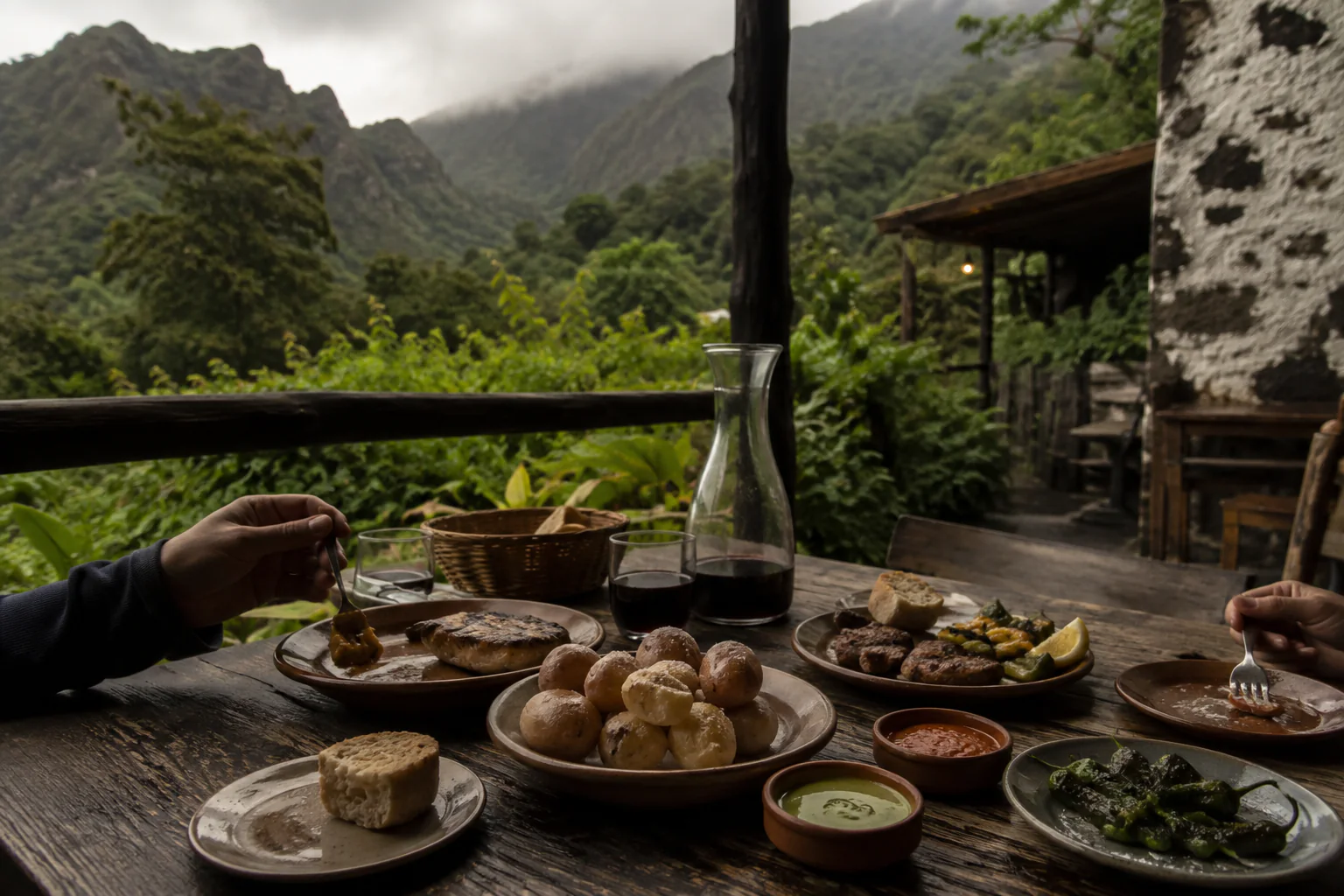
Half a day lets you go inside buildings, sit down to eat and stop watching the clock.
A full day only makes sense combined with something else. Anaga is very close, and the pairing works particularly well.
Common mistakes
- Treating it as a twenty-minute stop on the way somewhere else. It is the visit that loses most to haste.
- Not stepping into a single courtyard. The city stays a set of façades.
- Going on a Sunday expecting atmosphere.
- Coming up from the south without a jacket.
- Confusing it with Santa Cruz. They are two adjacent but distinct cities: La Laguna is the historic one, Santa Cruz the port and administrative capital.
- Hunting for parking in the centre at midday. It is a controlled and busy zone; leave the car on the edge and walk in.
Frequently asked questions
Is it accessible for someone with reduced mobility? Much of the centre is flat, which helps considerably. The cobbles on some streets can be uncomfortable in a wheelchair. If that is your case, a route can be designed to avoid them as far as possible.
Is it worth it with children? It works better combined: some city, then forest or coast. Children usually like the courtyards more than expected.
Can I visit independently? Perfectly. What a guided visit adds is not access but context: why the plan is the way it is, what to look at in each building and how it all fits into the island’s Atlantic history.
How does it relate to Anaga? The municipality of San Cristóbal de La Laguna includes part of the Anaga Rural Park. In other words, the same World Heritage city extends into a UNESCO Biosphere Reserve. That is why the two work well on the same day.
Is there an entrance fee? Walking the city is free. Some individual buildings have their own visiting arrangements, worth checking.
What is the best time of year? Any. It is one of the few visits on the island that does not depend on the season, though in winter it is worth being ready for rain.
If you would rather have it explained
I guide two private days that start here: one continues into the Anaga forest and a food stop, the other heads down into northern wine country. In both, the time spent in the city matches your actual interest.
Read next: Anaga and walking and Tenerife food and wine.
Qualifications, registrations and professional associations
Official Canary Islands Tourist Guide, Starlight Guide and low and medium mountain route guide.
- Official guideGTI-289
- Starlight Guideno. 40
- Low and medium mountainAFDA0611
- Active tourismTA-4-0026356.16
- Tourism intermediaryI-0005095.1
Registered active tourism activity with the current civil liability and assistance or accident insurance required by law.