
Tenerife guide
How to plan your Tenerife trip
Almost every trip that turns out flat fails in the same place: the time calculation. People plan Tenerife as if it were a small flat island, and it is a small and very vertical one. This piece gathers what genuinely needs deciding before you book anything.
The rule that explains nearly everything
Tenerife is about eighty kilometres long and rises from sea level to just over 3,700 metres. That verticality has two consequences that shape any itinerary.
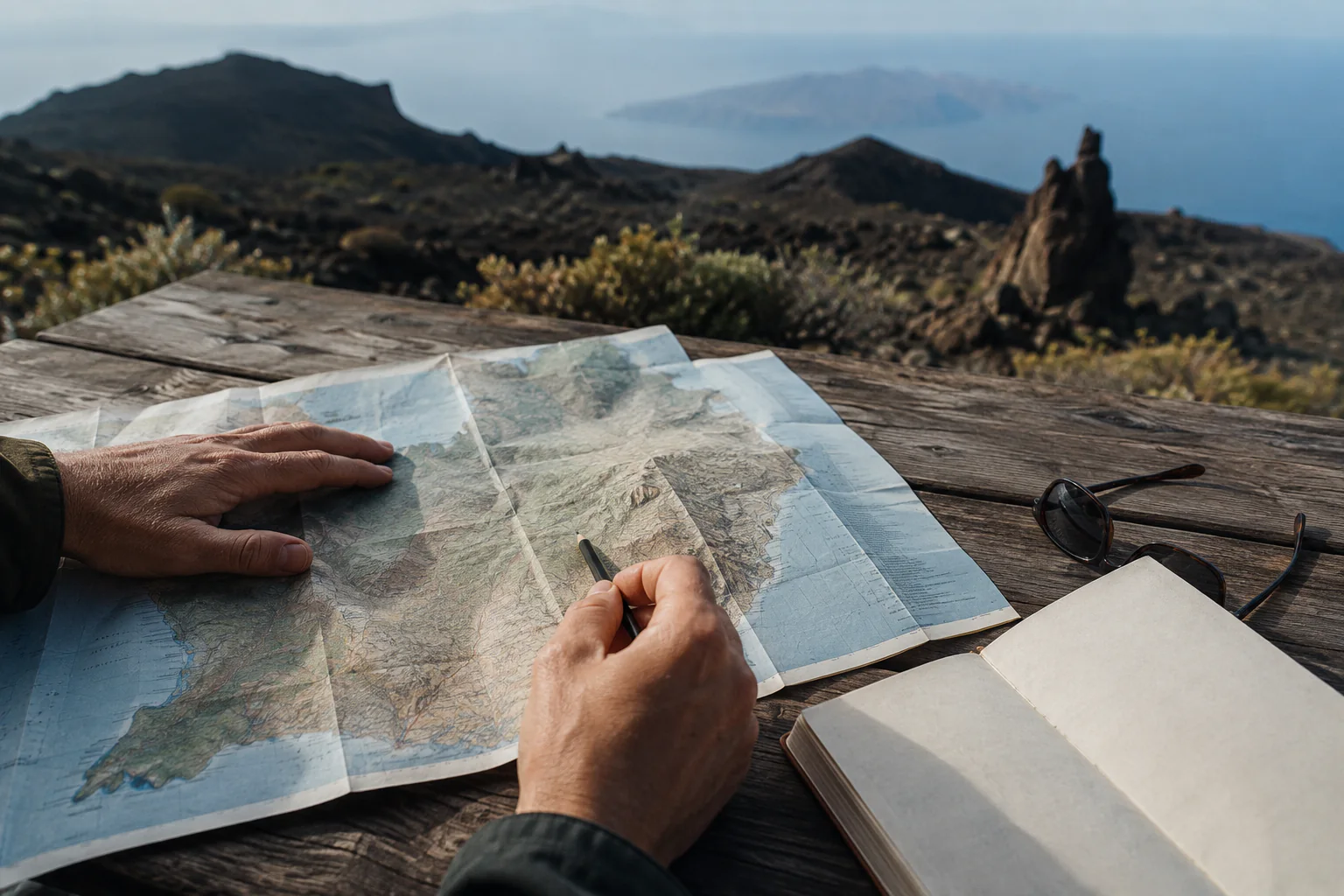
First: kilometres do not count. Off the motorway you are on mountain roads with continuous bends. A journey the map solves in forty minutes can take twice that, and more in mist, roadworks or weekend traffic.
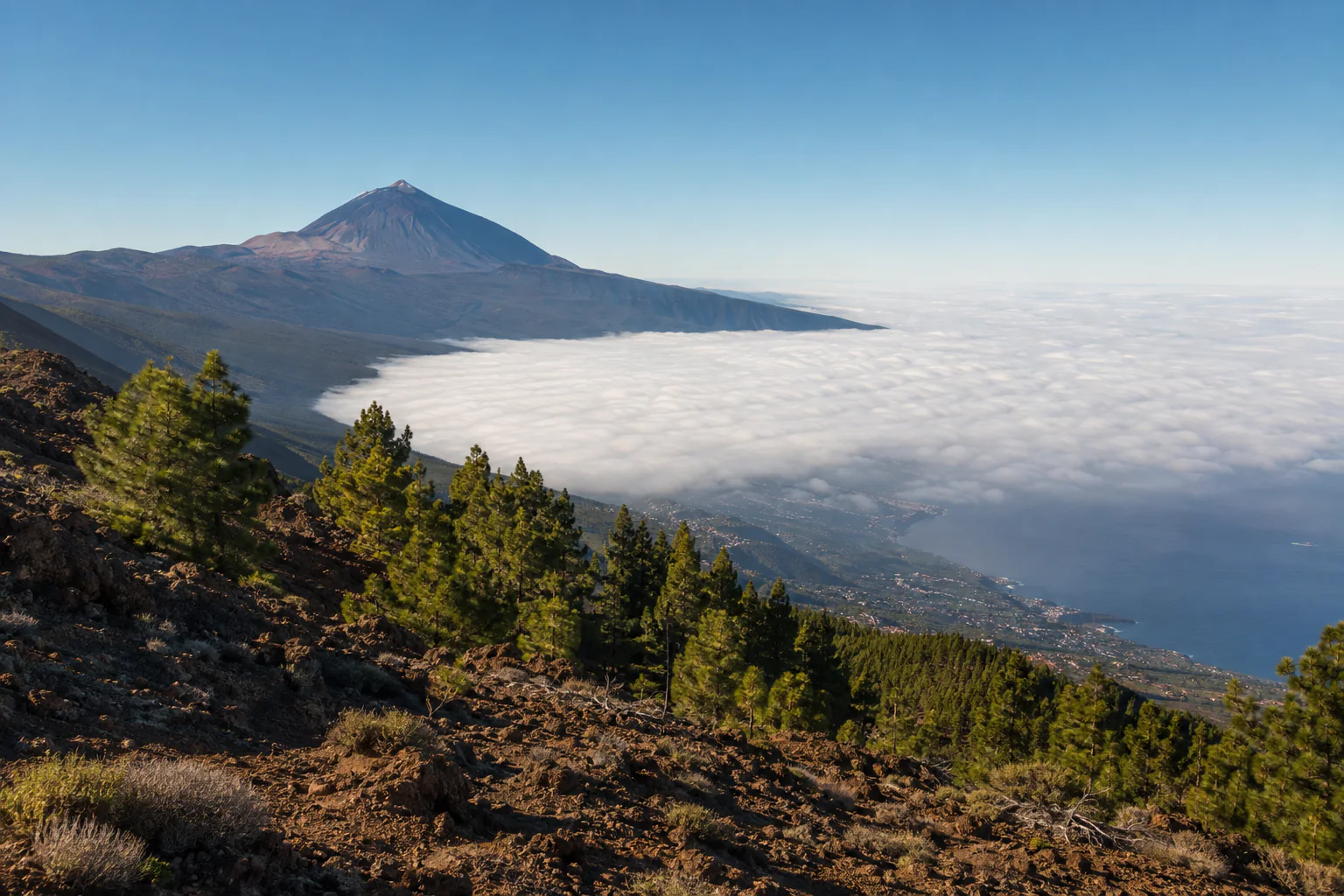
Second: there are several climates at once. The trade winds arrive from the north-east carrying moisture, meet the mountains and form a band of cloud on the northern slope at mid-altitude. That is why the north is green and the south is dry, and why you can set off in sunshine and hit thick mist half an hour later. Above that layer, at the summit, the sky is usually clear.
Accept those two things and the rest of the planning falls into place.
How many days you need
Three days. Enough for an introduction: Teide, a day in the north and some coast. You see little, but you see it properly if you do not try to cover more.
Five days. This is where the island starts to make sense. Teide unhurried, Anaga and La Laguna, the north-west, and a day with no plan.
A week or more. Room to add the night sky, the inland villages, the west coast and a trip to another island.
One piece of advice that applies throughout: leave one day unplanned. It covers repeating whatever you loved, the day that dawns grey, or simply resting.
Where to stay, and what it implies
There is no single answer, but the choice matters far more than people calculate, because it determines how much time you spend on the road each day.
South. Most of the tourist accommodation, more reliable sunshine and close to the main airport for international leisure flights. In exchange, everything in the north is a long way off.
North. Greener, damper, more urban and more local. A better base for Anaga, La Laguna and the farmed landscape. Sunshine is less guaranteed.
Around La Laguna and Santa Cruz. A good base if heritage, city life and Anaga interest you. Less beach.
Inland or north-west. For quiet and landscape. A car is essential.
If your trip is short and your interests are spread out, changing base halfway often saves more time than repacking costs.
Car or no car
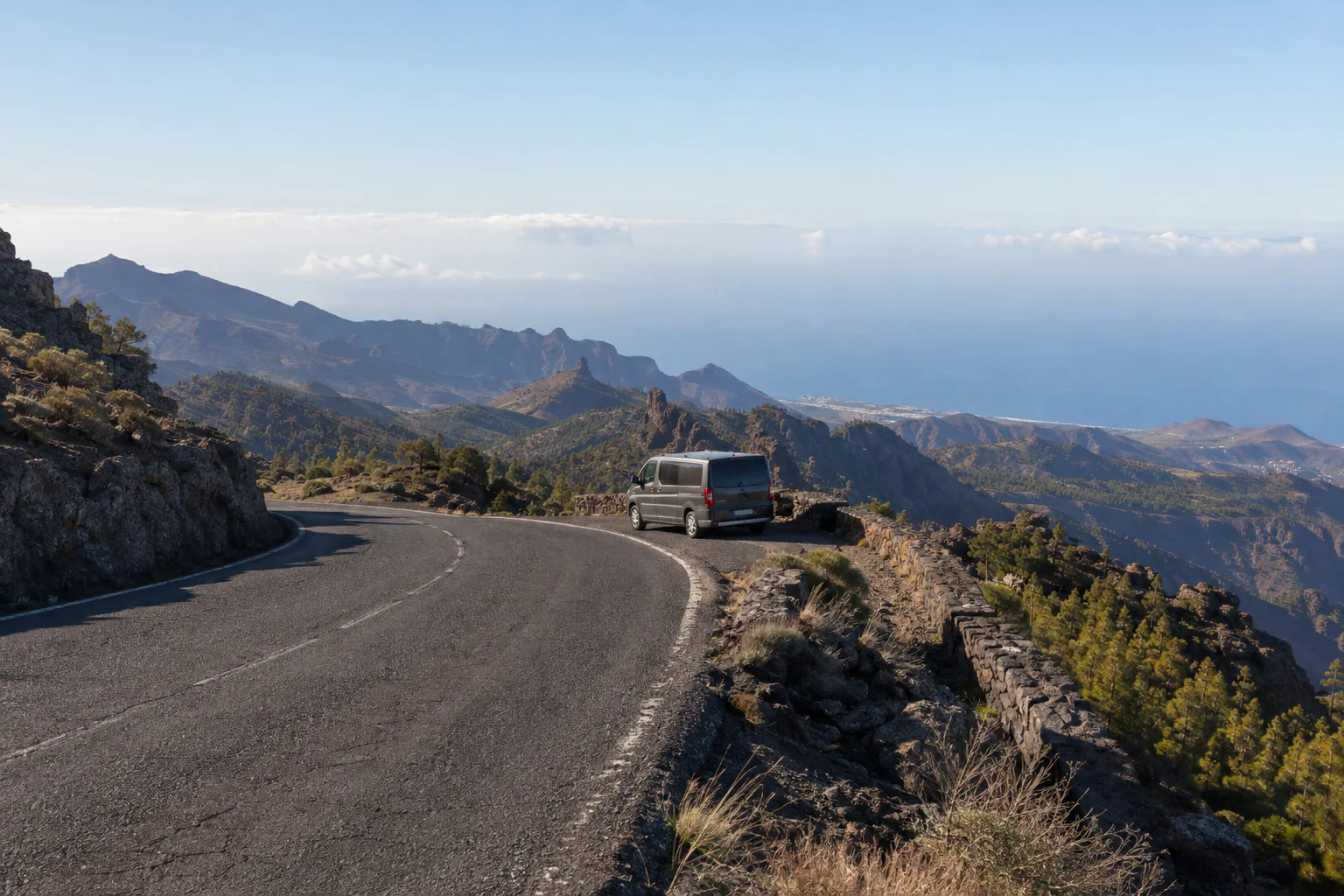
With a car you gain autonomy, but accept the bends, scarce parking at popular spots and how tiring night driving on mountain roads is.
Without a car you can do a good deal by public transport between the main towns, and solve specific days with excursions or a private service.
One combination that works well: a car for coastal and free-exploration days, and a guided service for mountain days, night sky, or places where not knowing the road costs you more than it saves.
What to pack
The short list, after seeing the same things repeatedly:
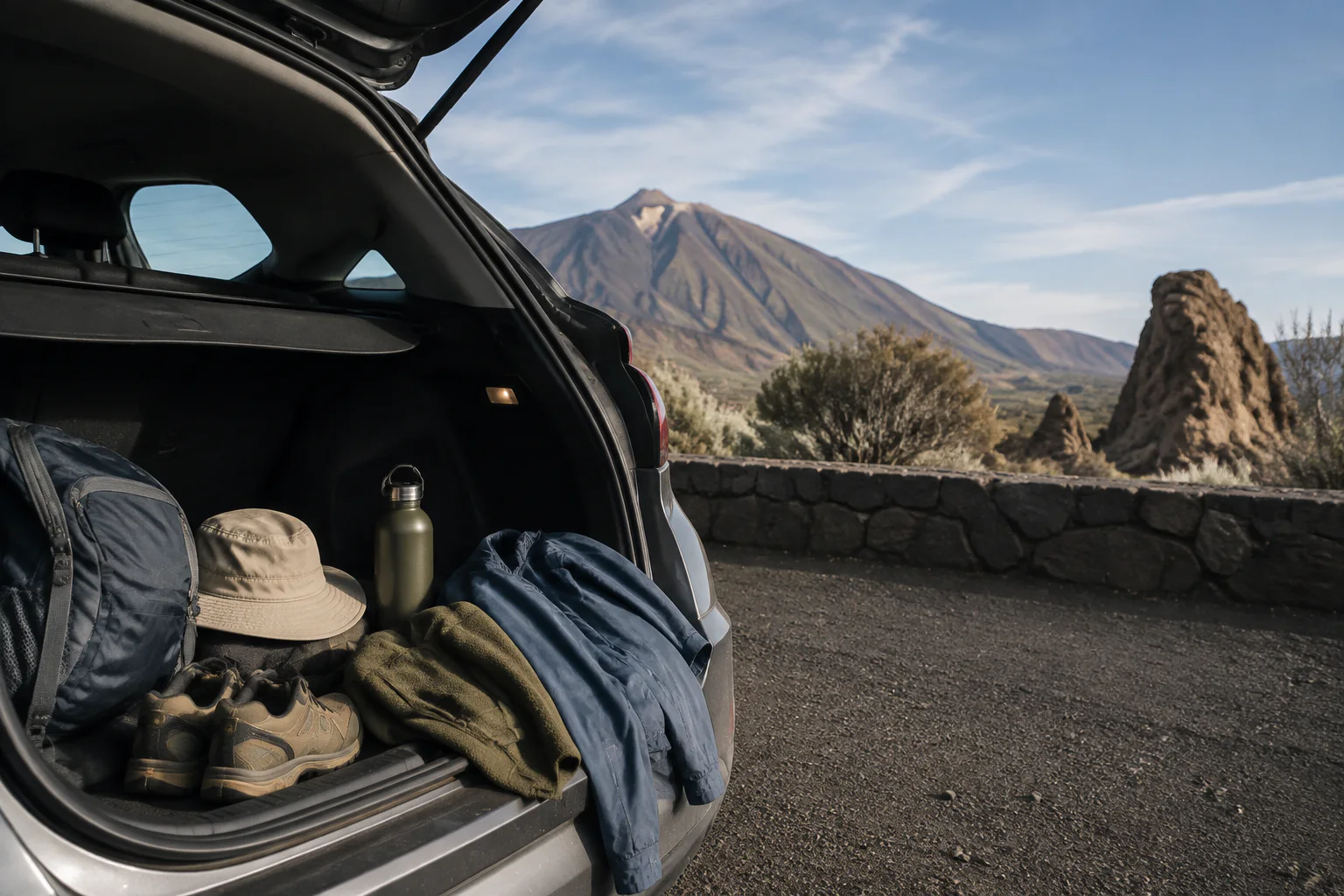
- Genuinely warm clothing, even in summer. A sweatshirt is not enough for the summit or for nights at altitude.
- A windproof jacket. At altitude and at northern viewpoints, wind is the deciding factor.
- Closed shoes with good grip. They cover forest, volcanic terrain and La Laguna’s cobbles.
- High-factor sun protection. Radiation is stronger at altitude even when the air feels cool.
- Swimwear and beach kit, obviously, but not only that.
- A light waterproof if you travel between autumn and winter or head north.
- No adaptor needed: standard European sockets.
How to split the days
A structure that tends to work, adaptable to your base:
- A day at altitude. Teide National Park, with time, ideally including late afternoon.
- A day of historic, green north. La Laguna unhurried and Anaga, which are close to each other.
- A coastal day. Beach, fishing towns or time on the water.
- A day in the west. Ravines, cliffs and mountain villages.
- A night for the sky, at any point in the trip, ideally away from a full Moon.
- A free day.
What I do not recommend: pairing Teide and Anaga on the same day. Opposite ends of the island with opposite climates. It fits on the map, not in the day.
When to come
There is no bad season, but there are differences:
- Winter. Mild on the coast, possible snow at the summit, long nights that are good for the sky. It can rain in the north.
- Spring. A very good time: high-altitude flowering, comfortable temperatures and fewer visitors than summer.
- Summer. Hot on the coast, arid at altitude, busy and expensive. Short nights.
- Autumn. Stability, warm sea and fewer visitors. Usually the season I recommend most to anyone with a choice.
One note on calima: an episode of suspended dust that can occur at any time of year, reducing visibility and raising temperatures. It lasts a few days and cannot be forecast far ahead.
The most common planning mistakes
- Estimating times from the map. The mother of all errors.
- Cramming three parts of the island into one day.
- Arriving without warm clothing.
- Not booking in advance what requires booking, whether a winery, a restricted route or access to the summit of Teide.
- Assuming the weather in the south is the weather on the island.
- Leaving the north for the last day and discovering it was your favourite part.
- Leaving no slack in the schedule.
Frequently asked questions
Does anything need booking far in advance? It depends. Access to the summit of Teide is taken months ahead; some restricted routes and winery visits also require prior booking. Check the relevant official channels.
Can you visit Tenerife without driving? Yes, combining public transport between towns with excursions or private services for mountain days.
Which area is best for a first visit? For a short beach trip, the south. If landscape and culture are the draw, the north gives more, even if the sunshine is less reliable.
Is it worth visiting another island? Only with a week or more. On short trips, the day lost to travel is expensive.
Is it comfortable with children? Very. What needs rationing is driving time, not activities.
And with reduced mobility? Workable with planning. Much of La Laguna is flat and there are points in the national park accessible from the car park. The key is designing the days with that in mind from the start.
If you would rather not organise it yourselves
I prepare private routes from your dates, your accommodation, your interests and the time genuinely available. The conversation beforehand is exactly the one you have just read, applied to your case.
See the private tours · Write to me
Read next: how to visit Teide, stargazing in Tenerife and food and wine.
More useful information
Keep planning your visit
Related guides to help you make informed decisions.
Qualifications, registrations and professional associations
Official Canary Islands Tourist Guide, Starlight Guide and low and medium mountain route guide.
- Official guideGTI-289
- Starlight Guideno. 40
- Low and medium mountainAFDA0611
- Active tourismTA-4-0026356.16
- Tourism intermediaryI-0005095.1
Registered active tourism activity with the current civil liability and assistance or accident insurance required by law.